


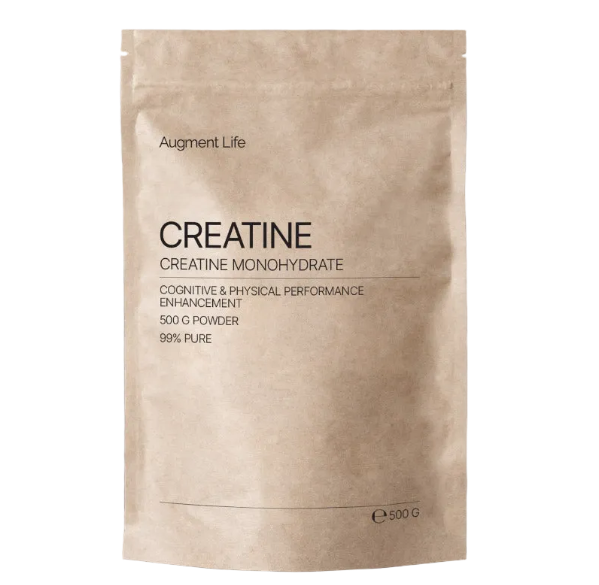
Creatine is a protein substance primarily found in muscles and brain tissues, where it’s needed for energy synthesis. Creatine is one of the most tested supplements out there, and it has been proven to increase muscle mass and benefit exercise performance. Many human studies indicate that creatine helps improve memory and cognitive performance in young and elderly individuals, and could prevent the first signs of aging, like physical and cognitive impairments.
Benefits of Creatine Monohydrate
- Clinical studies show that creatine is the single most effective supplement for improving muscle mass and exercise performance, as well as endurance, strength, and power development.
- Creatine depletion has been linked to physical and cognitive deficits, and creatine supplementation can improve short and long-term memory of the young and elderly.
- Early research shows that creatine supplementation could help with gastrointestinal diseases like Chron's, while topical creatine treatments could prevent signs of skin aging.
Efficacy Studies
- A large number of human clinical studies found that creatine improves muscle mass and strength in younger and older individuals (Wu et al., 2022). Also, creatine can improve exercise performance, endurance, and power development during exercise.
- A 2007 study on creatine supplementation among the elderly revealed that subjects experienced enhancements in long-term memory after consuming 20 g of creatine for one week. Creatine was able to improve the memory of healthy young vegetarians, who tend to lack creatine deposits (Kaviani et al., 2020).
- A case study published in the American College of Gastroenterology Case Reports Journal highlighted a 33-year-old man with Crohn’s Ileitis. He experienced inflammation of the ileum due to Crohn’s Disease. The study revealed that a daily creatine supplementation of 1,034g resulted in significant improvements in the patient’s symptoms (https://doi: 10.14309/crj.2016.146).
- Early research indicates that topical creatine may reduce the visibility of wrinkles, enhance skin firmness, promote skin repair, and shield DNA cells from UV damage. Additionally, it may stimulate collagen production, offering notable benefits for the skin. (https://doi.org/10.1016/j.jaad.2004.10.143)
Take with water at any time of day.
Can be taken consistently without cycling; timing is flexible.
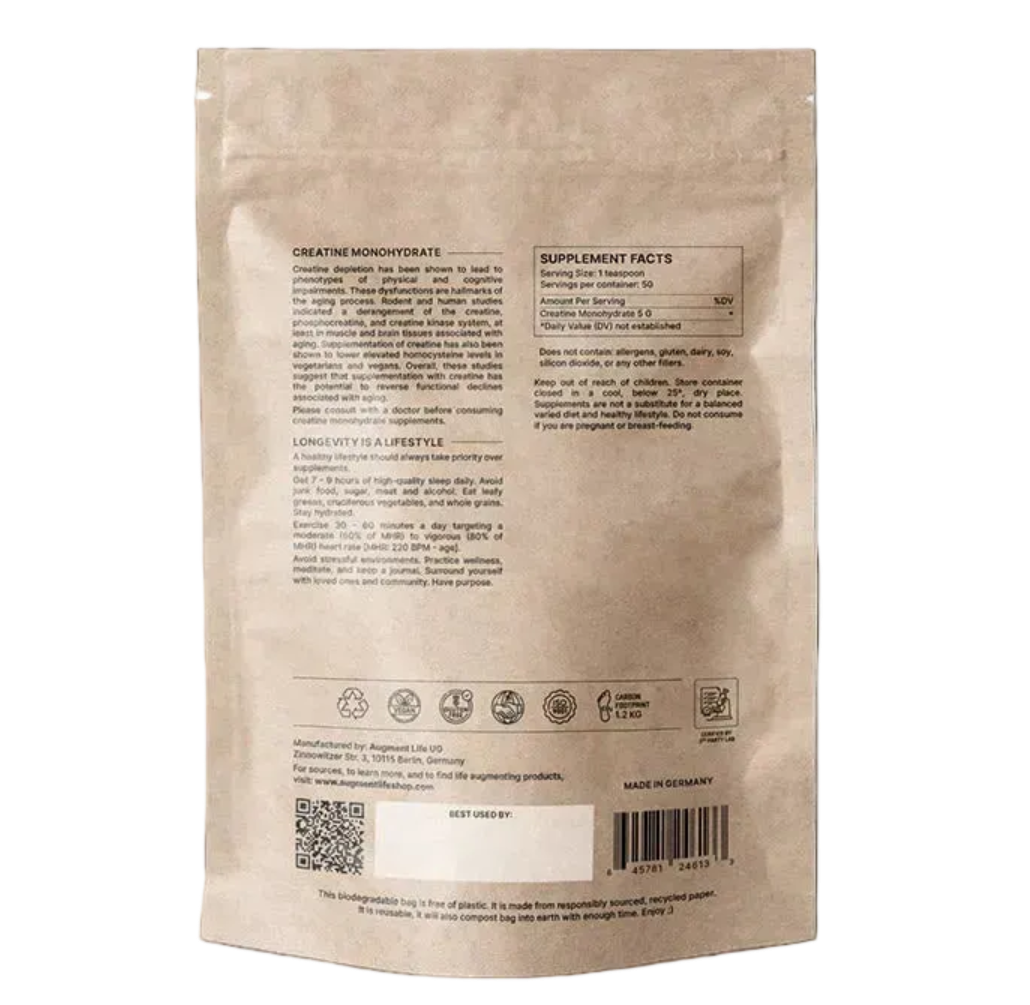
| Serving size | 5g |
| Servings per container | 50/100 |
| Creatine Monohydrate | 5g |
How to use
Take with water at any time of day. Can be taken consistently without cycling; timing is flexible.
Warnings
Product for use in adults. Food supplements should not be used as a substitute for a balanced diet and healthy lifestyle. This product is not intended to diagnose, treat, or prevent any disease. Do not exceed the recommended daily dose. Keep out of reach of young children.
Allergens
Does not contain: allergens, gluten, dairy, soya, sillicon, dioxide.
Creatine is a protein substance primarily found in muscles and brain tissues, where it’s needed for energy synthesis. Creatine is one of the most tested supplements out there, and it has been proven to increase muscle mass and benefit exercise performance. Many human studies indicate that creatine helps improve memory and cognitive performance in young and elderly individuals, and could prevent the first signs of aging, like physical and cognitive impairments.
Benefits of Creatine Monohydrate
- Clinical studies show that creatine is the single most effective supplement for improving muscle mass and exercise performance, as well as endurance, strength, and power development.
- Creatine depletion has been linked to physical and cognitive deficits, and creatine supplementation can improve short and long-term memory of the young and elderly.
- Early research shows that creatine supplementation could help with gastrointestinal diseases like Chron's, while topical creatine treatments could prevent signs of skin aging.
Efficacy Studies
- A large number of human clinical studies found that creatine improves muscle mass and strength in younger and older individuals (Wu et al., 2022). Also, creatine can improve exercise performance, endurance, and power development during exercise.
- A 2007 study on creatine supplementation among the elderly revealed that subjects experienced enhancements in long-term memory after consuming 20 g of creatine for one week. Creatine was able to improve the memory of healthy young vegetarians, who tend to lack creatine deposits (Kaviani et al., 2020).
- A case study published in the American College of Gastroenterology Case Reports Journal highlighted a 33-year-old man with Crohn’s Ileitis. He experienced inflammation of the ileum due to Crohn’s Disease. The study revealed that a daily creatine supplementation of 1,034g resulted in significant improvements in the patient’s symptoms (https://doi: 10.14309/crj.2016.146).
- Early research indicates that topical creatine may reduce the visibility of wrinkles, enhance skin firmness, promote skin repair, and shield DNA cells from UV damage. Additionally, it may stimulate collagen production, offering notable benefits for the skin. (https://doi.org/10.1016/j.jaad.2004.10.143)
Take with water at any time of day.
Can be taken consistently without cycling; timing is flexible.
| Serving size | 5g |
| Servings per container | 50/100 |
| Creatine Monohydrate | 5g |
How to use
Take with water at any time of day. Can be taken consistently without cycling; timing is flexible.
Warnings
Product for use in adults. Food supplements should not be used as a substitute for a balanced diet and healthy lifestyle. This product is not intended to diagnose, treat, or prevent any disease. Do not exceed the recommended daily dose. Keep out of reach of young children.
Allergens
Does not contain: allergens, gluten, dairy, soya, sillicon, dioxide.
